TEMPEWALA
0
You have cooked paneer a hundred times. Soya chunks too — soak, squeeze, into the gravy. This is the same move.
The bag looks unfamiliar, so most people open it once, eat a few cubes dry, decide it is a health snack, and leave the rest in the cupboard. That is the only thing that goes wrong with this product.
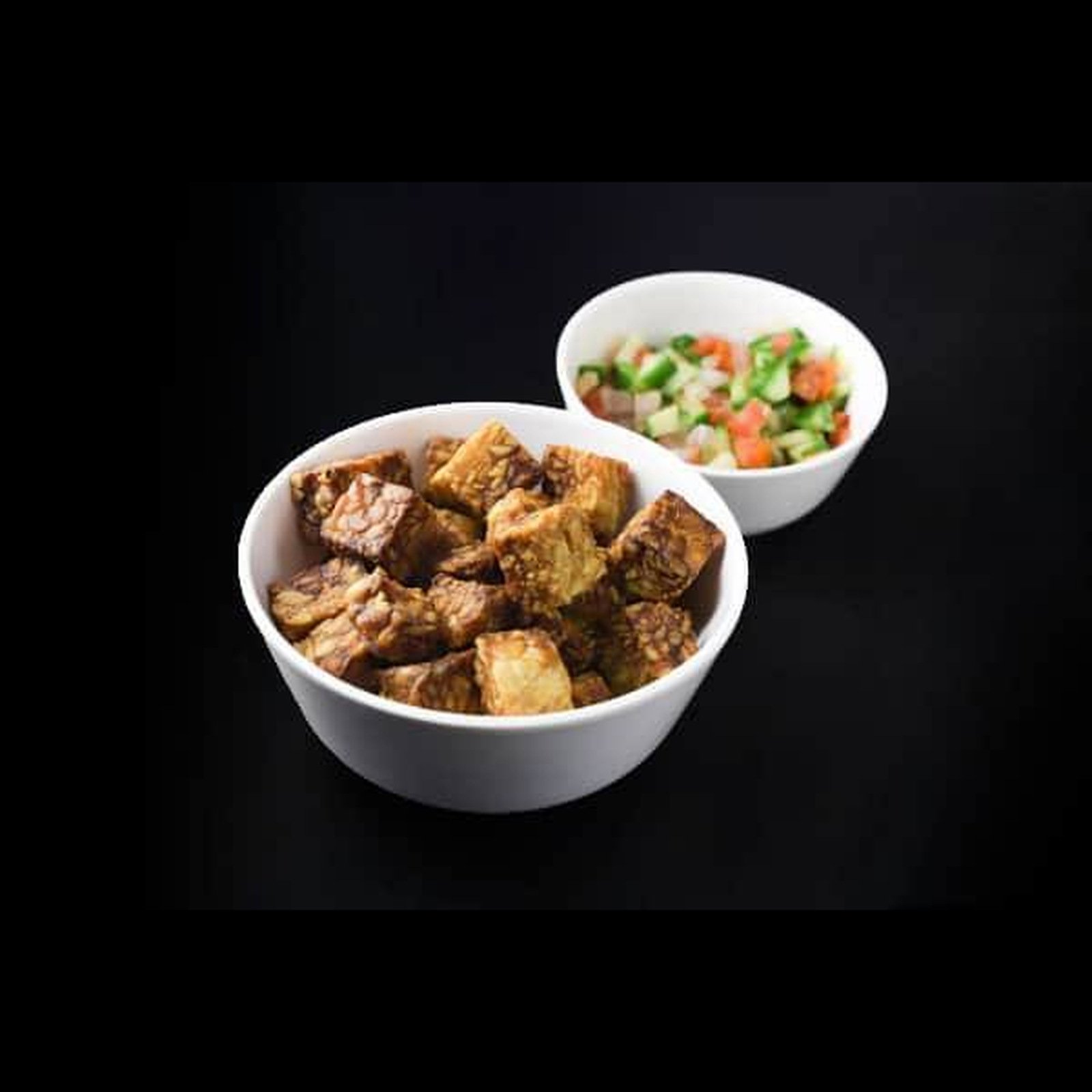
Cover the cubes in hot water. Come back in fifteen minutes. You now have about 350g of tempeh from a 100g pack — soft enough to cut, firm enough to hold its shape in a gravy.
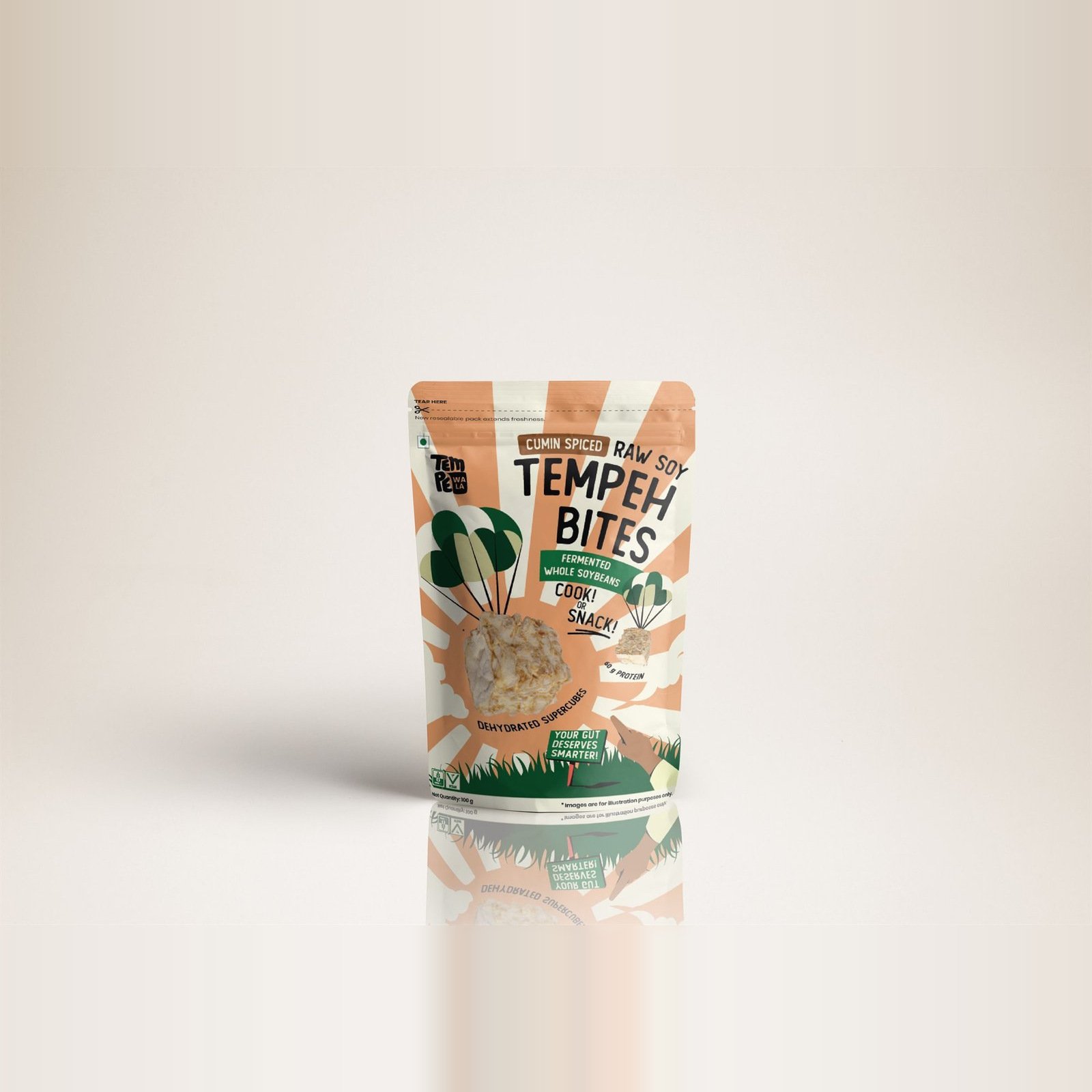
Soy Dehydrated Tempeh Cumin is soybeans, cumin, and Rhizopus Oligosporus starter culture — and the cumin genuinely co-ferments alongside the soybeans through the full 72-hour fermentation, it isn’t added afterward. The result is low-temperature dehydrated to keep the live culture dormant but intact. No salt, no coating, no preservatives.
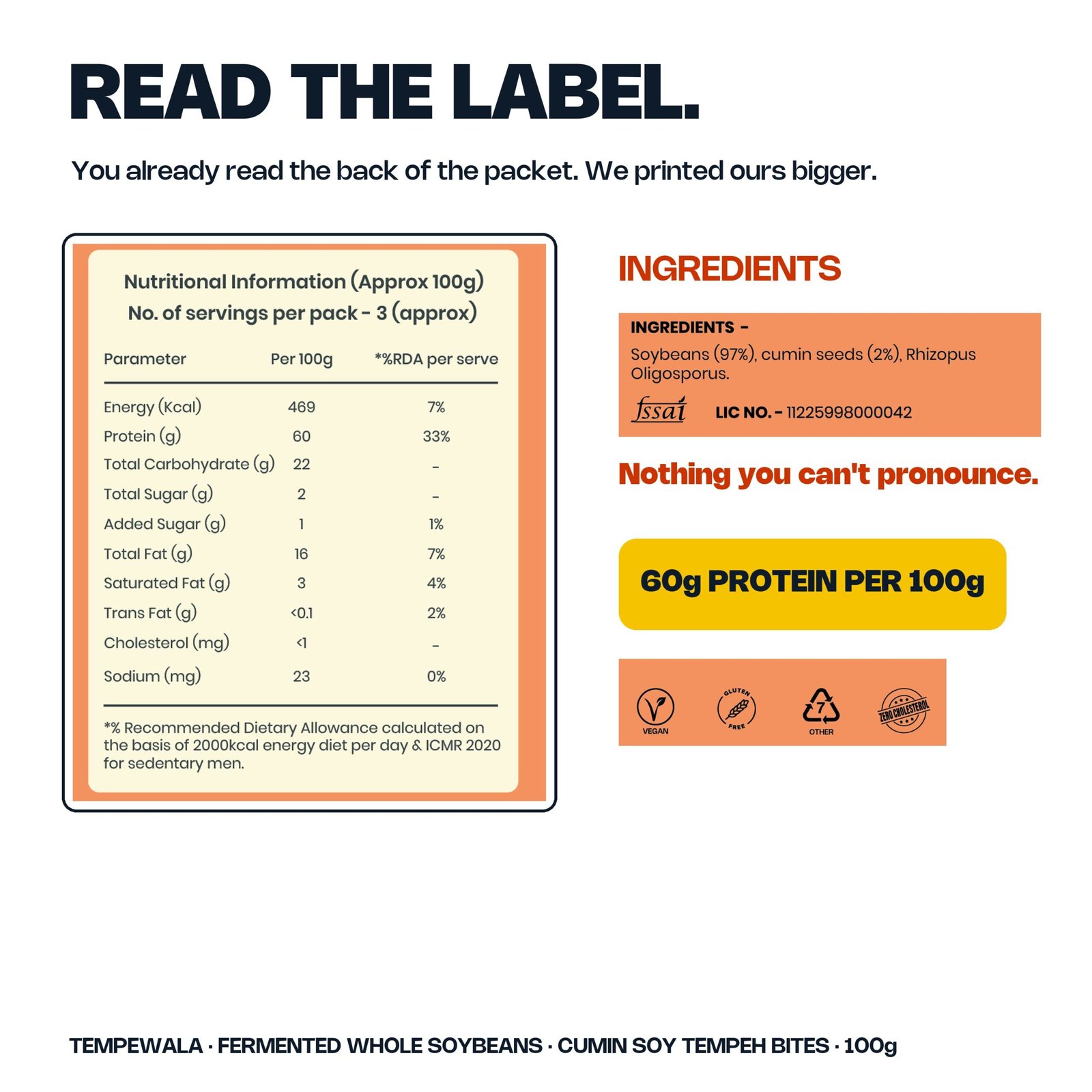
Roughly 60g of protein per 100g and about 22mg of sodium, with a warm, earthy cumin note layered over the tempeh’s natural umami — the same free-glutamate savouriness found in miso and soy sauce.
Eat it straight from the pack for the live cultures intact, or rehydrate in hot water for 15 minutes. Once rehydrated, it’s actively fermenting again — cook, freeze, or eat it right away. To keep the probiotic benefit, avoid boiling; add it after cooking or eat it cold. Processed in a facility that also processes peanuts and soy.
Fresh tempeh gives you three days and a fridge shelf. This gives you six months and a cupboard. Same beans, same 72-hour ferment — water is the only thing missing, and you put that back in fifteen minutes.
Ready to cook
If the live culture is why you bought it, don’t boil it — add it at the end, or eat it cold.
Quick soak — hot water, fifteen minutes. Drain and squeeze. Cook it like fresh tempeh.
Straight into the pot — add the dry cubes to a pulao or a pressure-cooker dish with the rice. They take up the water and the flavour as it cooks.
Cold and raw — soak in cool water overnight in the fridge. Eat it cold, in a salad or a bowl.
Start with bhurji: soak, crumble, and cook it like you would paneer bhurji — the cumin is already in there. For the full set — bhurji, masala curry, tikka, Indo-Chinese stir-fry, rolls, coconut curry — see seven Indian tempeh recipes → All of them work with these cubes once they are soaked.
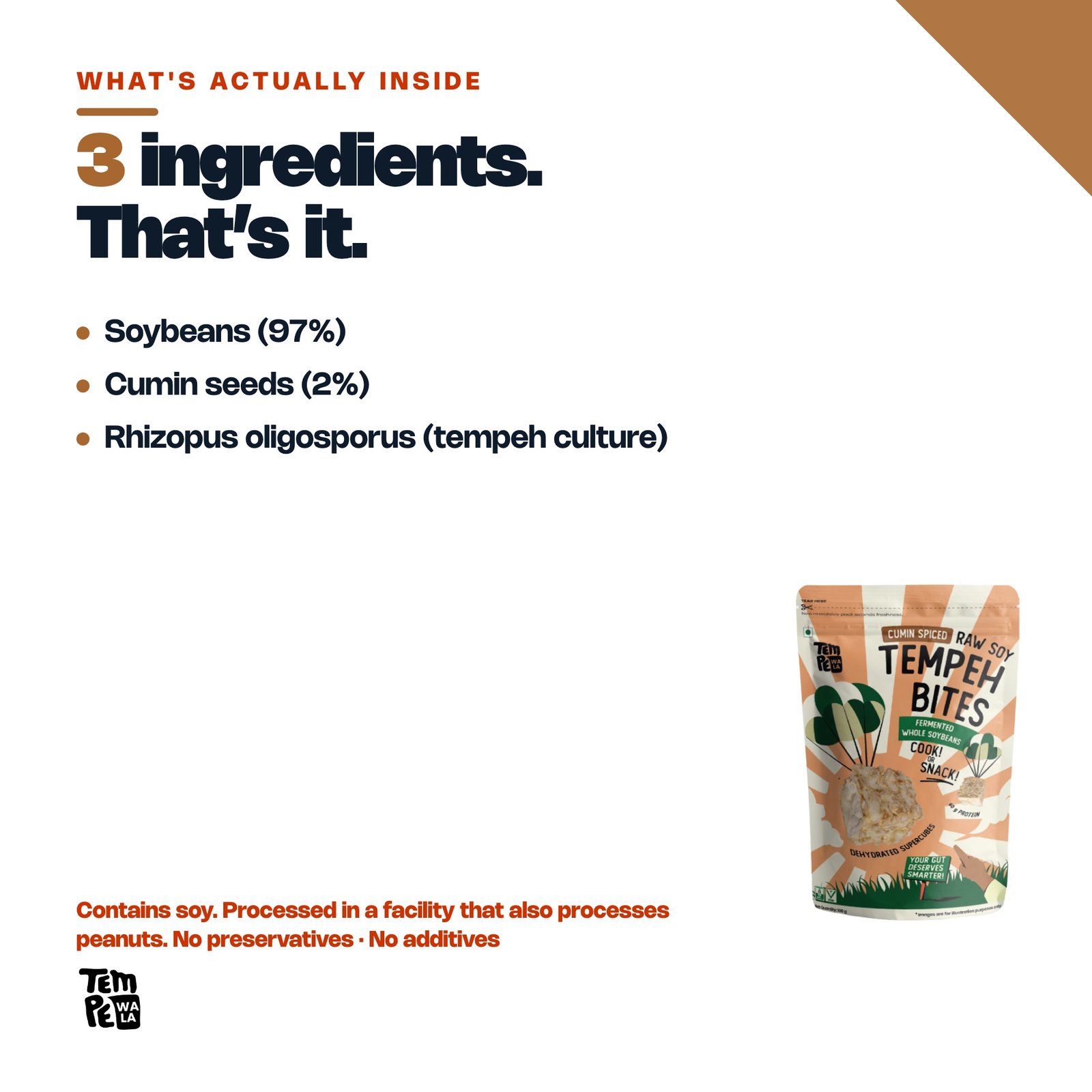
What’s actually inside
Contains soy. Processed in a facility that also processes peanuts. No preservatives · No additives
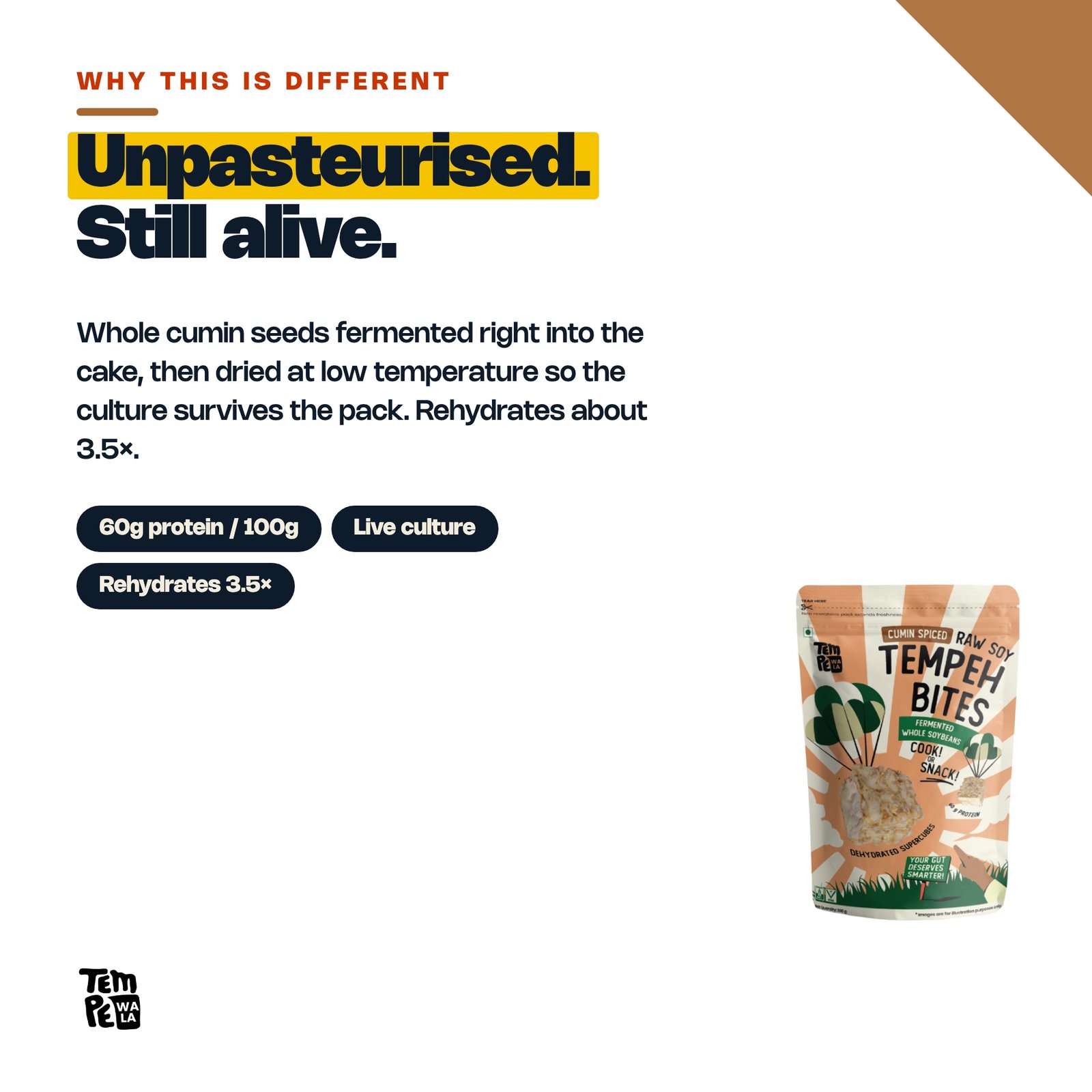
Why this is different
Whole cumin seeds fermented right into the cake, then dried at low temperature so the culture survives the pack. Rehydrates about 3.5×.
How it’s made
1,000 years of Indonesian fermentation. Made in Bangalore since 2017.
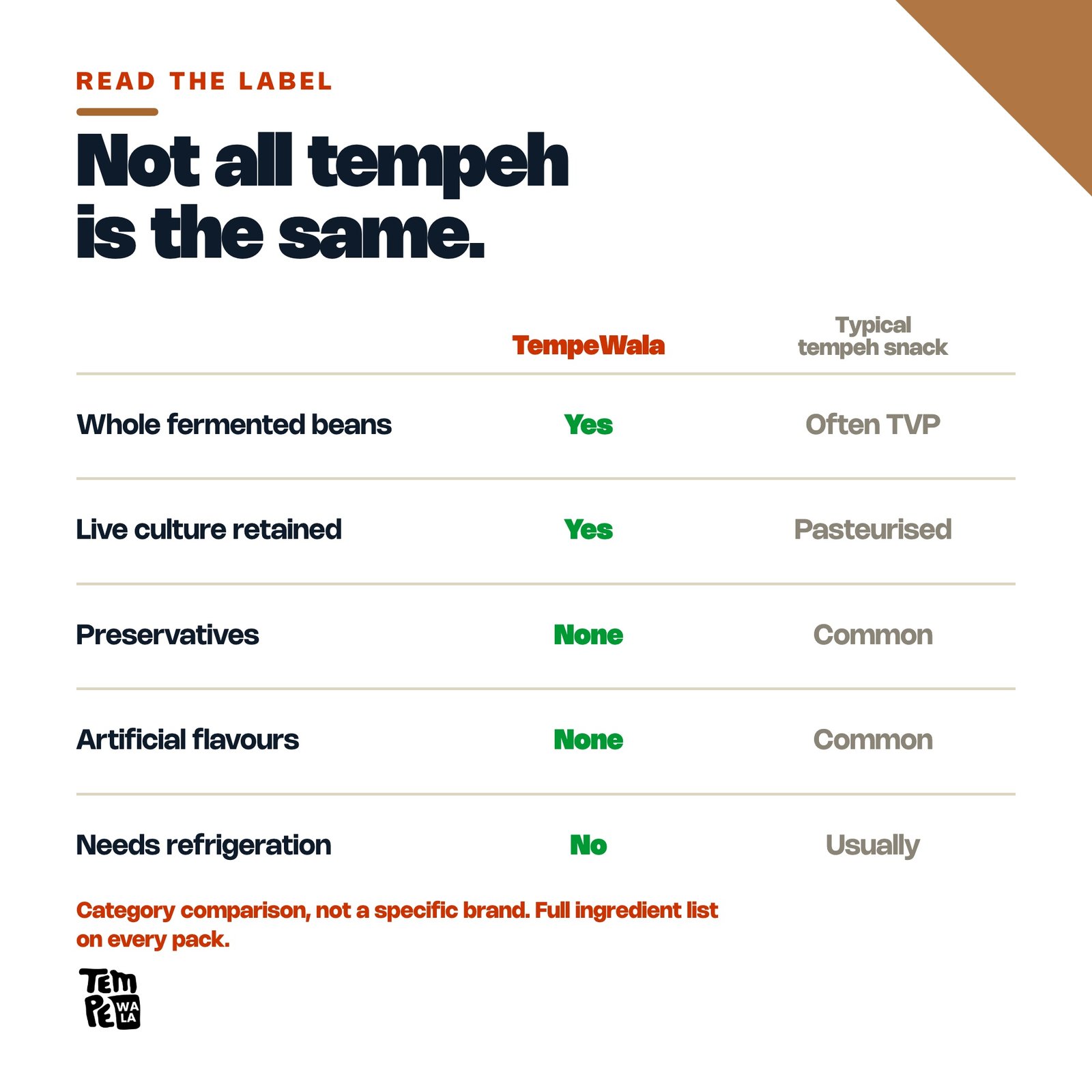
Read the label
| TempeWala | Typical tempeh snack | |
|---|---|---|
| Whole fermented beans | Yes | Often TVP |
| Live culture retained | Yes | Pasteurised |
| Preservatives | None | Common |
| Artificial flavours | None | Common |
| Needs refrigeration | No | Usually |
Category comparison, not a specific brand. Full ingredient list on every pack.
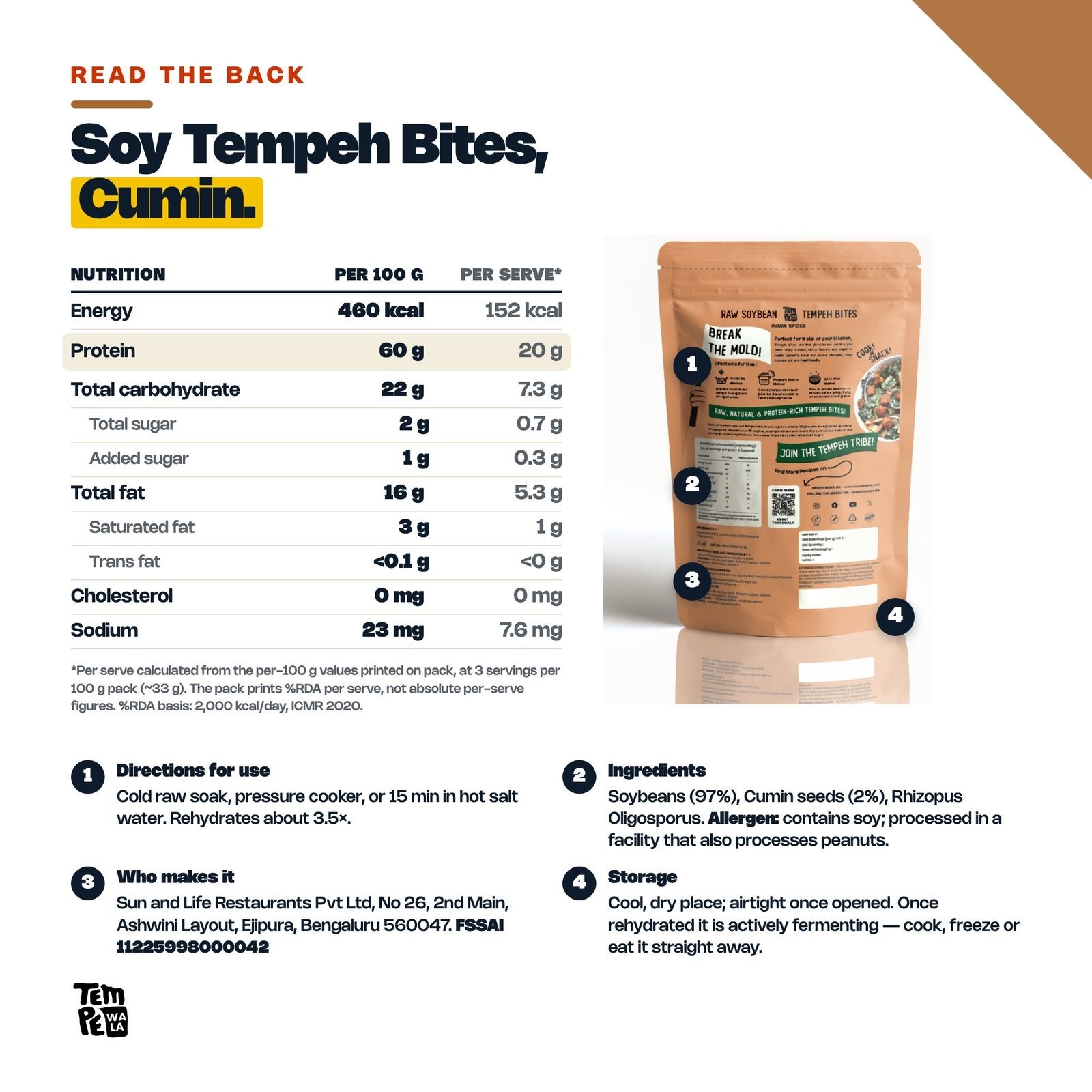
Nutrition
| Protein | 60 g |
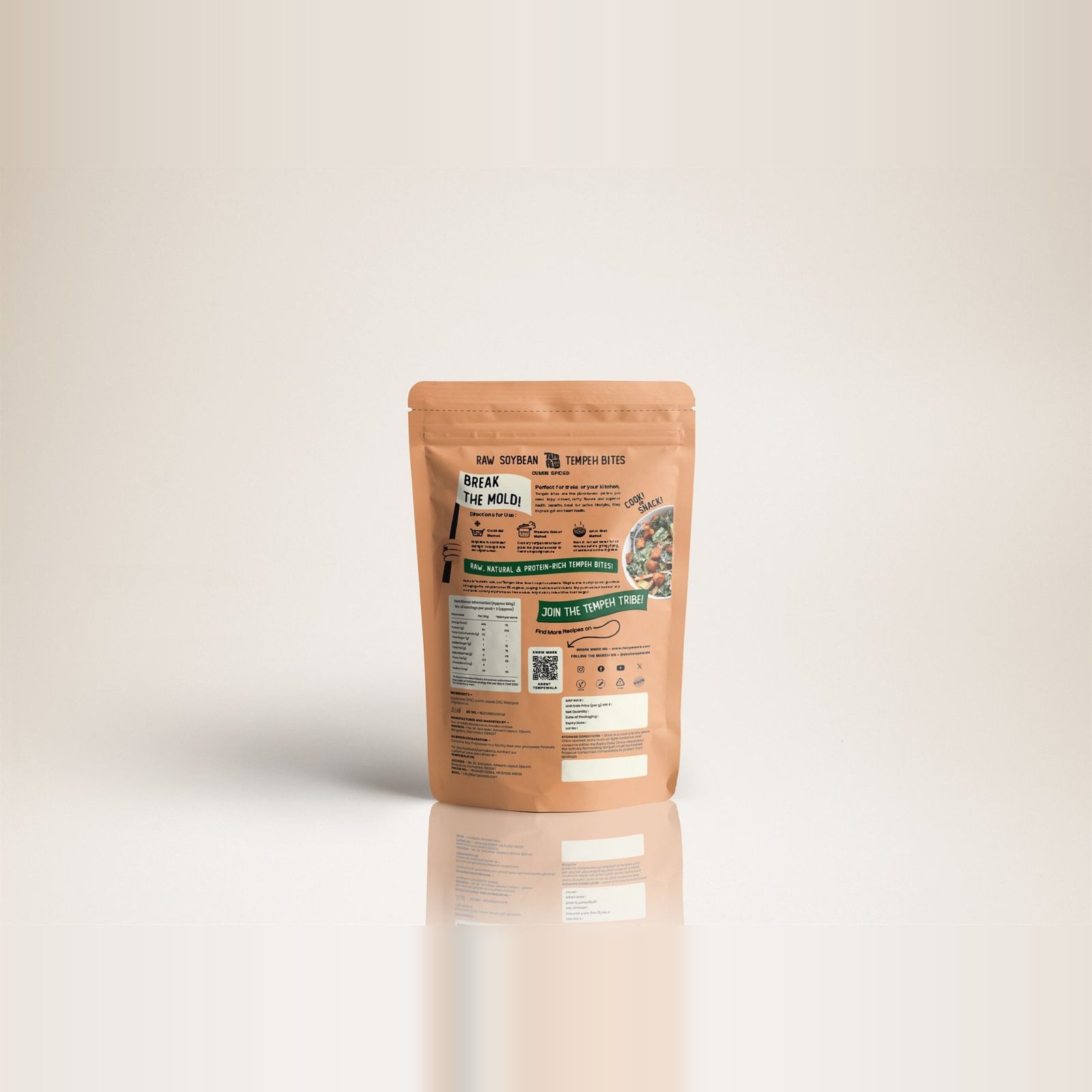
Full nutrition panel is printed on every pack.
How to keep it
Store cool and dry. Refrigerate or freeze after opening.
How to eat it
Eat them dry, straight from the pack — the culture is intact. Or rehydrate in hot water for 15 minutes, then cook. Once rehydrated they are actively fermenting, so cook, freeze or eat them straight away. To keep the probiotic benefit, don’t boil — add them after cooking, or eat them cold.


“I’ve been buying tempeh from Vaibhav since 2017. I wouldn’t trust anyone else with my tempeh — it’s the best in the world!”
Sanjay Narayan
“Tempe Wala’s tempeh is of even better quality than what I’ve had in Indonesia. It’s authentic, nutritious, & absolutely amazing!”
Bruna Lisboa
Reviews
There are no reviews yet.